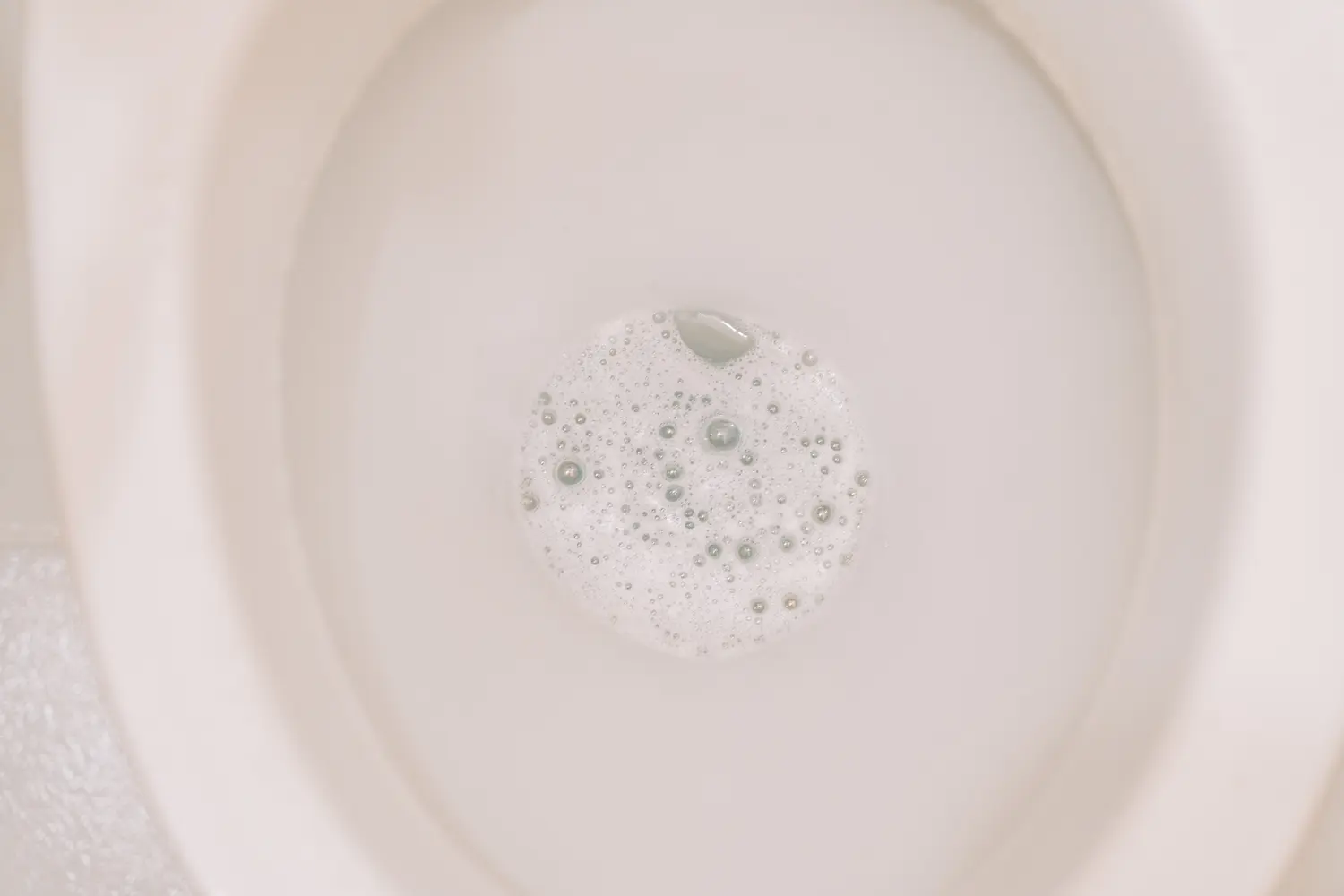
When your toilet gurgles or bubbles, it’s because air is being forced through your plumbing in a way it shouldn’t be. Small problems like this can turn into sewage backups, costly repairs, and serious headaches. But if you catch it early and bring in septic experts, you can often avoid the worst-case scenario.
Normally, air flows smoothly through your vent pipes (those pipes that go up through your roof), keeping pressure balanced as water moves through your drains. When something blocks that airflow (or when there’s a clog somewhere in the line), air gets pushed backward. That’s when you hear that gurgle or see bubbles in the bowl.
So a bubbling toilet is your plumbing system trying to tell you something. It might be a minor issue, or it could be an early warning sign of a much bigger problem, especially if you’re on a septic system here in King County WA.
Common Causes of a Bubbling Toilet
Partial Clog in the Toilet Drain
A partial blockage in the drain line connected to your toilet can slow water flow just enough to cause bubbling. Maybe it’s a buildup of toilet paper, or something that shouldn’t have been flushed in the first place. Either way, when water struggles to move past the clog, air gets trapped and pushed back up through the toilet bowl.
Blocked Main Sewer Line
A blockage in your main sewer line affects everything connected to it. Tree roots, grease buildup, or debris can all cause these kinds of clogs. In the Pacific Northwest, where trees and moisture are everywhere, root intrusion is especially common.
Clogged or Blocked Vent Stack
Your vent stack lets sewer gases escape and keeps air pressure balanced in your pipes. If that vent gets clogged (by leaves, bird nests, or even ice during cold snaps), air has nowhere to go. That’s when it pushes back into your toilet, causing gurgling and bubbling.
Septic System Backflow or Overflow
If your septic tank is full, failing, or not draining properly, wastewater has nowhere to go. That backup creates pressure in your plumbing system, which can force air (and eventually sewage) back through your drains.
Weather-Related Sewer Line Issues
Here in King County WA, heavy rains are just a fact of life. But when the ground is saturated, your drain field can’t absorb wastewater as efficiently. That can lead to slower drainage, backups, and (you guessed it) a bubbling toilet.
DIY Renovation or Plumbing Mistakes
Even small mistakes (like an improperly connected vent or a drain that wasn’t installed at the right angle) can cause ongoing bubbling problems. If your toilet started gurgling after a remodel, it’s worth having a professional take a look.
Choose Us for Your Septic Pumping Needs
Fill out our form and we'll be in touch!
Signs It’s a Septic System Problem
- Your toilet bubbles regularly, not just once in a while. If it happens every time you flush or whenever you run water somewhere else in the house, that’s a pattern worth paying attention to.
- You’re noticing slow drains in multiple areas of your home. When more than one drain is affected, the problem is usually deeper in the system, in the main line or the septic tank itself.
- There’s a sewage smell inside or outside your home. This is a big warning sign. If you smell rotten eggs or sewage near your drains, in your yard, or around your septic tank, something isn’t draining properly.
- Your yard is soggy or greener than usual near the drain field. A failing drain field can cause wastewater to rise to the surface. If the grass over your septic area looks unusually lush (or if there’s standing water), your system needs attention.
- It’s been a while since your last septic pumping. Most septic tanks need to be pumped every three to five years, depending on household size and usage. If you’re overdue, a full tank could be causing backups and bubbling.
What You Can Do
- Reduce your water usage as much as possible. Don’t run the dishwasher, washing machine, or take long showers. The less water going into your system, the less pressure you’re putting on it.
- Don’t flush anything other than human waste and toilet paper. Now is not the time to push your luck with “flushable” wipes or anything else.
- Call a septic professional. This isn’t the time for guesswork. A trained technician can inspect your tank, check your drain field, and pinpoint exactly what’s going on.
What Not to Do
There are a few common mistakes homeowners make that can actually make a bubbling toilet worse.
Don’t pour chemical drain cleaners down your toilet. These products are harsh and can damage your pipes over time. If you’re on a septic system, they can also kill the bacteria that keep your tank functioning properly.
Don’t ignore the problem. It’s tempting to hope that a gurgling toilet will just go away on its own. Unfortunately, it rarely does. What starts as an occasional bubble can turn into a full-blown sewage backup if left unchecked.
Puget Sound Septic Can Help
If your toilet is bubbling and you’re not sure why, don’t wait until it turns into a bigger problem.
Our team serves homeowners throughout King County WA with expert septic inspections, pumping, and repairs. We’ll diagnose the issue, explain your options, and get your system back to working order.
Contact us today to schedule an inspection! We’re here to help.
FAQs
When you run the shower, a large volume of water flows through your drain system. If there’s a partial clog or a blocked vent, that water creates pressure changes that push air back into your toilet. That’s what causes the bubbling.
In the short term, it’s not dangerous. But it’s a sign that something isn’t working right in your plumbing or septic system. The longer you wait to address it, the more likely it is to turn into a bigger problem.
Yes. Heavy rain can saturate the ground around your septic system or put extra pressure on your sewer line. This can slow drainage and cause bubbling, especially if your system is already under stress.
Absolutely. If your septic tank is full, failing, or not draining properly, it can push air and wastewater back through your plumbing system. That’s one of the most common causes of bubbling in homes with septic systems.