
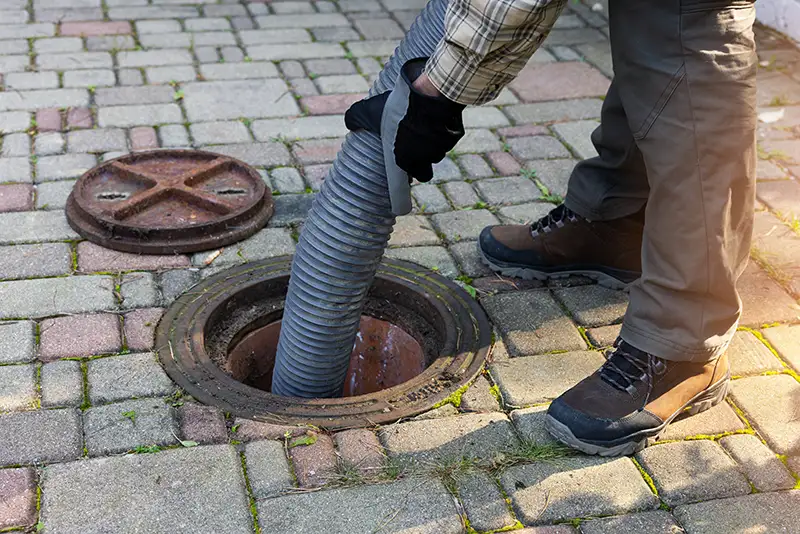
Noticing a foul odor near your lawn or watching your sinks drain at a crawl is enough to trigger instant stress. As a homeowner in King County, WA, a malfunctioning septic system isn’t just an inconvenience—it’s a major household disruption. If you’re currently dealing with a suspected issue, seeking information early is the smartest step you can take. Catching a fault before it escalates protects your property, your family’s health, and your wallet.
What are the most common septic tank problems that require repair?
The most common septic tank problems requiring professional repair include failed drainfields, tree root intrusion, clogged baffles or effluent filters, structural tank leaks, distribution box (D-box) failures, and hydraulic overloading. Most septic issues stem from neglected pumping, flushing non-degradable items, tree root invasion, or heavy rainfall overpowering the system.
Jump to a Problem:
- Clogged or Failed Drainfield
- Tree Root Intrusion
- Clogged Baffles or Effluent Filters
- Cracked Tank or Compromised Riser Lid
- Distribution Box (D-Box) Failure
- Hydraulic Overloading & Seasonal PNW Rain
Choose Us for Your Septic Pumping Needs
Fill out our form and we’ll be in touch!
Clogged or Failed Drainfield
 The drainfield (or leachfield) is the final stage of your septic system, responsible for filtering effluent safely back into the surrounding soil. When a drainfield fails, wastewater can no longer percolate downward, causing dangerous backups.
Signs, Causes, and Early Warnings
- Early Signs: Slow-draining fixtures throughout the home, gurgling pipes, or unusually lush, bright green patches of grass directly above the drainfield line.
- Severe Signs: Standing water or soggy soil over the absorption area, strong sewage odors outdoors, or plumbing waste backing up into ground-floor drains.
- Primary Causes: Over time, biomat (a natural layer of bacteria and organic solids) can grow too thick if grease, non-degradable items, or excessive solids escape the tank. Soil compaction from heavy machinery or vehicles parked overhead also destroys soil permeability.
Understanding King County Soil & Alternative Systems
In many rural or environmentally sensitive areas across King County—such as coastal properties, river valleys, or sites with shallow hardpan/glaciomarine drift soils—a traditional gravity drainfield cannot be installed or repaired via standard trench excavation. High water tables and low-permeability soils prevent adequate natural filtration. In these cases, Public Health – Seattle & King County requires specialized alternative treatment systems:
- Mound Systems: An elevated bed of engineered sand built above the natural soil line to provide adequate vertical separation from groundwater before effluent reaches native soil.
- Intermittent or Recirculating Sand Filters: Separate concrete or lined containment boxes filled with graded sand media that filter effluent before it discharges to a shallow disposal area.
- Glendon® BioFilter Systems: Specialized above-ground bio-mounds utilizing layers of specific sand and rim-flow dosing containers, ideal for extremely steep slopes, high water tables, or minimal soil depth.
- Aerobic Treatment Units (ATUs) & Drip Dispersal: Advanced treatment units that act like mini municipal sewage plants, oxygenating wastewater before pressure-dosing it through shallow drip tubing networks.
Consequences of Inaction
Ignoring a failing drainfield forces untreated sewage up to the surface or back into your home’s plumbing. Beyond immediate property damage, pathogens and nitrates can contaminate groundwater and nearby natural waterways.
How to Prevent Drainfield Clogs & Soil Failure
- Inspect and pump your septic tank every 3 to 5 years (or adhere to annual maintenance contracts required for advanced ATU/Glendon systems) to keep solids out of the field.
- Never park cars or drive heavy equipment over the absorption area, mound, or bio-filter beds.
- Avoid dumping cooking oils, grease, or chemicals down your drains.
Repair Options, Estimated Costs, and Timelines
- Process: Repairs begin with a site diagnostic, including a professional perc test (percolation test) and soil log evaluation to determine current absorption rates and soil depth. Solutions range from high-pressure hydro-jetting to clear biological sludge and shock-treating lines, to soil rejuvenation via aeration, or completely excavating and replacing the system under Public Health – Seattle & King County permitting.
- Cost Range: $2,000 to $5,000 for minor pipe repairs or line rejuvenations; $7,000 to $20,000+ for standard gravity drainfield replacement; $18,000 to $35,000+ if site conditions require a full mound, Sand Filter, Glendon BioFilter, or ATU installation.
- Timeline: Minor repairs take 1 to 2 days; complex alternative system installations take 3 to 7 days, depending on site excavation, weather, and engineering/health department permitting.
Risk Level: High (Immediate Biological Hazard)
A failing drainfield is a biological hazard that requires immediate evaluation by a licensed technician.
Tree Root Intrusion
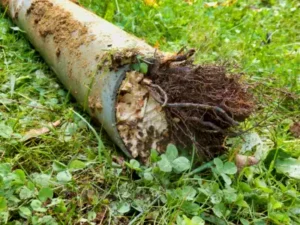 Tree and shrub roots naturally seek out moisture and nutrients. Your septic tank and distribution pipes offer an abundant source of both, making them prime targets for root invasion.
Signs, Causes, and Early Warnings
- Early Signs: Frequent toilet clogs, localized slow drainage, or faint sewage smells near tree lines.
- Severe Signs: Complete line blockages, structural cracks in the tank body, or sewage pooling near heavy landscaping.
- Primary Causes: Fast-growing or water-seeking tree species (like willows, poplars, or maples) planted too close to septic components. Roots exploit tiny hairline cracks or pipe joints, expanding as they grow inside.
Consequences of Unchecked Root Growth
As roots mature inside pipes, they trap passing solids, forming solid blockages. Left unaddressed, expanding root networks can break pipes entirely or crack concrete tank walls, leading to collapse.
How to Prevent Tree Root Intrusion
- Maintain a root-free zone of at least 10 to 20 feet around all septic components.
- Plant only shallow-rooted grasses or ground covers near your drainfield and tank.
Root Removal, Pipe Repair Costs, and Timelines
- Process: Technicians clear the blockage using mechanical root cutters or hydro-jetting, followed by a video camera pipe inspection. Structural repairs or pipe replacements are made, and root-inhibiting barriers may be applied.
- Cost Range: $300 to $1,500 for root clearing and line cleaning; $1,500 to $5,000+ if major pipe segments or tank sections need structural repair.
- Timeline: Most root clearing is completed in 2 to 6 hours; pipe replacements take 1 to 2 days.
Risk Level: Moderate to High
If caught early, it’s often a quick fix. When ignored, root expansion can destroy underground infrastructure.
Clogged Baffles or Effluent Filters
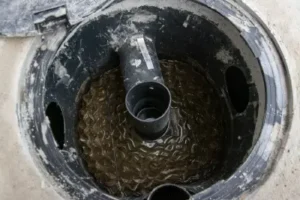 Septic tank baffles guide wastewater flow and prevent floating scum and settling sludge from escaping into the drainfield. Effluent filters trap fine particles at the tank’s outlet. When these components clog, flow stops.
Signs, Causes, and Early Warnings
- Early Signs: Drains bubbling when a high-volume appliance (like a washing machine) discharges, or sluggish toilet flushes.
- Severe Signs: Raw sewage backing up into lower-level tubs or showers, or effluent overflowing near the tank’s access riser.
- Primary Causes: Flushing “non-flushable” items (baby wipes, feminine hygiene products, paper towels), dumping grease down the sink, or neglecting routine filter cleaning.
Consequences of Baffle or Filter Blockages
If the outlet baffle or filter clogs completely, wastewater has nowhere to go but back up into your home. Conversely, if an inlet baffle breaks, solids can bypass the tank entirely and destroy your drainfield.
How to Prevent Baffle and Filter Clogs
- Clean or inspect your effluent filter annually.
- Follow the rule of three: only flush human waste and standard toilet paper.
Maintenance & Replacement Costs
- Process: The tank is accessed via the riser. The filter is pulled, pressure-washed, or replaced. Damaged PVC or concrete baffles are replaced or repaired with sanitary tees.
- Cost Range: $250 to $750 for filter cleaning, replacement, or minor baffle repair.
- Timeline: Typically completed within 1 to 3 hours.
Risk Level: Moderate
While a messy hazard when it backs up into the home, the fix is straightforward when caught before the drainfield is damaged.
Cracked Tank or Compromised Riser Lid
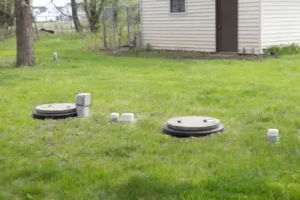 Whether made of concrete, plastic, or fiberglass, your septic tank must remain watertight. Cracks allow liquid waste to escape untreated or permit groundwater to rush in, while a damaged riser lid presents a critical physical safety hazard.
Signs, Causes, and Early Warnings
- Early Signs: Unexplained localized soil settling near the tank, faint odors without surface wastewater, or visible cracks/looseness on the surface access lid.
- Severe Signs: Ground collapse or sinkholes near the septic tank lid, persistent toxic odors, rapid tank overfilling during rain events, or active structural shifting.
- Primary Causes: Ground settling, freeze-thaw cycles, aging concrete degradation, or heavy surface loads (e.g., driving vehicles or heavy mowers over the tank or lid).
Risks of a Leaking Tank or Damaged Riser
Escaping wastewater contaminates nearby soil and groundwater. Inward leaks (groundwater entering the tank) overwhelm the system, washing scum and sludge layers straight into the drainfield. A cracked or compromised riser lid is a catastrophic fall hazard for children, pets, and adults.
How to Protect Your Tank and Cover
- Keep heavy machinery, construction equipment, and vehicles off the tank and drainfield areas.
- Ensure surface runoff drains away from the septic tank access risers.
- Secure access lids with tamper-resistant fasteners.
Tank Sealing, Lid Replacement Costs, and Timelines
- Process: The tank is pumped clean and inspected under static liquid-level testing. Minor surface cracks above the water line can be sealed with hydraulic cement or structural epoxies once exposed. Cracks below the water line or severe structural damage require excavating and replacing the tank vessel. Compromised lids or risers are replaced immediately.
- Cost Range: $150 to $450 for simple lid/riser replacement; $1,800 to $3,500 for professional excavation, structural crack sealing, and backfill; $6,000 to $12,000+ for complete tank excavation and replacement in the Seattle Metro area.
- Timeline: Lid replacements take 1 to 2 hours; structural sealing and excavation take 1 to 2 days; full tank replacement takes 2 to 4 days.
Risk Level: High (Safety & Environmental Hazard)
Structural tank defects and broken access lids pose immediate fall, health, and environmental hazards requiring urgent professional evaluation.
Distribution Box (D-Box) Failure
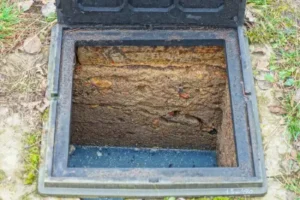 The distribution box (D-box) is an underground junction box that receives clarified effluent from the septic tank and divides it evenly across the drainfield absorption trenches.
Signs, Causes, and Early Warnings
- Early Signs: A single soggy spot or section of lush grass in one specific area of the drainfield while the rest remains dry; mild sluggishness in drains during peak usage.
- Severe Signs: Standing sewage pooled over one specific trench, while adjacent drainfield lines remain completely dry; complete systemic backups caused by a crushed or tipped box.
- Primary Causes: Ground settling causing the D-box to tilt, severe soil movement, root invasion, heavy equipment driving overhead, or solids building up in flow levelers.
Consequences of D-Box Tilting or Blockages
When a D-box tilts or clogs, effluent floods into a single drainfield line while others remain unused. This single trench quickly becomes hydraulically overloaded, leading to premature localized soil failure and full system collapse.
How to Protect Your Distribution Box
- Avoid driving heavy vehicles or machinery anywhere near the distribution network.
- Inspect the D-box during routine 3-to-5-year tank maintenance.
D-Box Leveling, Replacement Costs, and Timelines
- Process: Technicians locate and excavate the D-box cover—often requiring mini-excavator mobilization or deep hand-digging in local King County glacial till soils. The crew clears built-up sludge or root debris, adjusts flow levelers (turn tees), or levels and replaces the concrete or heavy-duty plastic distribution box.
- Cost Range: $1,800 to $3,200 for full excavation, releveling, pipe re-coupling, and replacing a distribution box in the Seattle Metro market.
- Timeline: 4 to 8 hours depending on excavation depth and soil conditions.
Risk Level: Moderate to High
Catching a tipped or clogged D-box early prevents premature failure of the entire drainfield.
Hydraulic Overloading & Seasonal PNW Rain
Hydraulic overloading occurs when more water enters the septic system than it was designed to process at one time, pushing liquid through the tank before solids can settle out.
Signs, Causes, and Early Warnings
- Early Signs: Drainage slowing down specifically on laundry days, after consecutive showers, or during sustained rainy weather.
- Severe Signs: Water rising in the septic riser, standing water over the drainfield during wet winters, or plumbing backups following heavy rainfall.
- Primary Causes: Internal leaks (running toilets/faucets), high-volume water usage spikes, roof downspouts directing runoff toward the absorption field, or heavy Pacific Northwest winter rainfall causing groundwater Inflow and Infiltration (I&I).
Long-Term Damage from System Flooding
When water rushes through the tank too rapidly, light scum and heavy sludge layers do not have adequate time to separate. Suspended solids are flushed straight into the distribution lines, clogging soil pores and causing permanent drainfield failure.
How to Manage Water Usage & Storm Runoff
- Spread high-volume water use (e.g., stagger laundry loads throughout the week).
- Fix running toilets and leaky plumbing fixtures immediately.
- Ensure downspouts and surface drainage discharge far away from the tank and drainfield.
Water Management Controls, Costs, and Timelines
- Process: Diagnosing household water leaks, re-routing surface runoff and gutter downspouts, installing water-conserving fixtures, or retrofitting an effluent pump chamber with timed dosing controls to meter flow to the drainfield evenly.
- Cost Range: $150 to $500 for leak fixes and runoff drainage adjustments; $1,500 to $4,000 for pump chamber or electrical control installations.
- Timeline: Simple adjustments take hours; pump system installations take 1 to 2 days.
Risk Level: Moderate
If addressed quickly by fixing leaks and managing water volume, long-term structural damage can usually be avoided.