
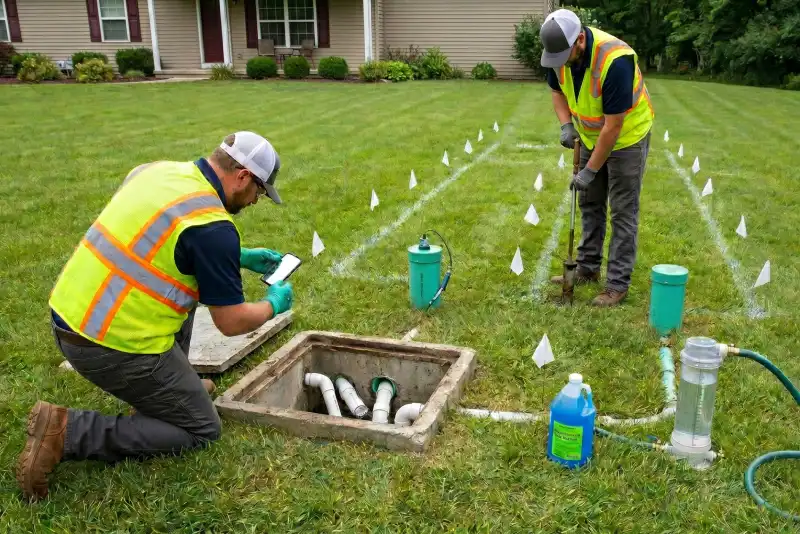
The unmistakable smell of sewage near your property or frustratingly slow drainage times throughout your home are all telltale signs you’re experiencing drain field failure. In this case, contacting a septic system professional should be your immediate priority. The sooner you address signs of a failing leach field, the better your chances of avoiding a complete system replacement.
A collapsed drain field is a septic emergency that prevents your entire system from functioning properly. When left unaddressed, septic tank drain field problems can quickly escalate into more complex and expensive issues. Raw sewage can back up into your home, contaminate your yard, and even pose health risks to your family and neighbors.
Don’t wait for the problem to get worse. Early intervention is key to minimizing damage and repair costs.
How Does Drain Field Failure Affect Your Septic System?
Here’s what happens when your leach field fails:
- Wastewater has nowhere to go. Without a functioning drain field, effluent backs up through the pipes and can re-enter your home through drains, toilets, and other fixtures.
- Sewage leaks into your yard. Untreated wastewater rises to the surface, creating health hazards and environmental contamination.
- Your septic tank overflows. The entire system becomes overwhelmed, leading to additional damage and costly repairs.
Your drain field (also called a leach field or septic field) plays a critical role in your septic system’s function. It’s responsible for filtering and dispersing wastewater from your septic tank into the surrounding soil. When drain field collapse occurs, this process breaks down entirely.
Signs of a Failing Septic Drain Field
Soggy Spots, Mud, and Standing Water
A properly functioning drain field should disperse wastewater evenly underground without any liquid reaching the surface. If you notice persistently wet areas, muddy patches, or standing puddles in your yard (especially near the drain field), it’s a strong indicator of septic drain field problems.
This moisture suggests that wastewater isn’t being absorbed properly, which is one of the most reliable leach field failure signs.
Unusually Lush or Green Grass
Does the grass over your drain field suddenly look healthier, greener, or faster-growing than the rest of your lawn? While it might seem like a bonus, this is actually one of the most common signs your septic field is failing.
When wastewater leaks close to the surface, it acts as fertilizer for your grass. This uneven growth pattern indicates that nutrients and moisture are escaping the system, a clear sign of septic leach field problems that require immediate attention.
Foul Sewage Odors
You should never smell sewage inside your home or near your drain field. If you detect a rotten egg smell, sulfurous odor, or any sewage-like scent around your property, it’s a serious warning sign.
Sewage odors indicate that waste isn’t being properly processed and contained. Whether the cause is a drain field collapse, a tank issue, or another septic system problem, this symptom demands professional inspection right away.
Slow Drains Throughout Your Home
Are your sinks, toilets, showers, and bathtubs draining more slowly than usual? While slow drains can result from simple clogs, they’re also one of the key signs your leach field is failing.
When your drain field becomes saturated or damaged, wastewater has difficulty leaving your home. If multiple drains are affected simultaneously, septic tank leach field failure is a likely culprit. Don’t ignore this symptom, contact a professional to diagnose the issue before it worsens.
Sewage Backup in Your Home
The most severe sign of drain field failure is sewage backing up into your home through toilets, showers, or floor drains. This is a septic emergency that poses immediate health risks and requires urgent professional attention.
If you experience sewage backup, avoid using any water fixtures and call a septic service company immediately.
Choose Us for Your Septic Pumping Needs
Fill out our form and we'll be in touch!
Common Causes of Drain Field Collapse and Failure
Lack of Routine Maintenance
Your septic system requires regular inspections and pumping to function properly. Without routine maintenance, solids can escape the tank and clog the drain field pipes, leading to premature failure.
Pro tip: Schedule septic inspections every one to three years and pump your tank every three to five years, depending on household size and usage. For older systems common in King County WA, more frequent maintenance may be necessary.
Tree Root Intrusion
Trees and large shrubs planted near your drain field naturally seek out moisture sources, including your septic pipes. Over time, roots can infiltrate and damage drainage lines, causing blockages and even crushing pipes entirely.
If you have trees within 30-50 feet of your drain field, root intrusion could be contributing to your septic drain field problems.
Soil Compaction
Heavy objects and vehicles (including cars, trucks, riding mowers, and even repeated foot traffic) can compact the soil above your drain field. Compacted soil loses its ability to absorb and filter wastewater effectively.
In severe cases, the weight can actually crush your septic pipes, causing immediate drain field collapse.
Water Overload
Flooding your septic system with excessive water overwhelms the drain field’s capacity to process and disperse liquid. Common causes include:
- Running multiple water-heavy appliances simultaneously
- Having leaky faucets or running toilets
- Directing downspouts or sump pumps toward the drain field
- Doing several loads of laundry in a single day
Managing your household water usage helps prevent septic tank drain field failure.
Flushing Non-Biodegradable Items
Your septic system is designed to process human waste and toilet paper, nothing more. Flushing items that don’t break down properly can clog pipes and damage your drain field. Common culprits include:
- “Flushable” wipes (which don’t actually break down)
- Feminine hygiene products
- Chemical cleaning solutions
- Cooking grease and oils
- Paper towels and tissues
- Cat litter
These items contribute to septic leach field problems and can significantly shorten your system’s lifespan.
Age of the System
Septic systems don’t last forever. Most drain fields are designed to function for 20-30 years with proper maintenance. If your King County WA home has an older septic system, age-related wear and tear may be the primary cause of your leach field failure.
Can Puget Sound Septic Repair a Failing Drain Field?
The good news is that not every failing leach field requires complete replacement. Depending on the severity and cause of the problem, leach field failure repair options may include:
- Hydro jetting: High-pressure water cleaning to clear blockages in drain field pipes.
- Pipe repair or rerouting: Fixing damaged sections without replacing the entire system.
- Aeration treatment: Introducing oxygen to restore biological activity in the soil.
- Partial drain field replacement: Replacing only the affected portions of the system.
- Complete system reconstruction: Necessary when damage is too extensive for repair.
Factors like soil conditions, system age, the extent of damage, and local King County WA regulations all influence the best approach. Only a professional inspection can determine the right solution for your specific situation.
Looking for Septic Services in King County WA?
Puget Sound Septic is here to help. We understand how stressful septic system problems can be, and we’re committed to providing fast, reliable solutions for homeowners throughout King County WA.
Unfortunately, drain field failures are not something you can fix with a DIY approach. These complex issues require professional expertise, specialized equipment, and knowledge of local codes and soil conditions unique to Western Washington.
So don’t let drain field failure turn into a septic disaster. Contact Puget Sound Septic today for expert diagnosis and repair services throughout King County WA.
Back to Drain Field Repairs