
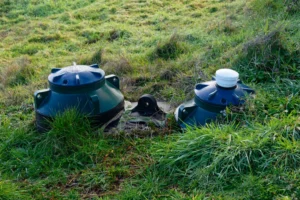
Your septic system is like an underground wastewater treatment plant right in your yard. When you flush a toilet or run water down a drain, that water travels through pipes into your septic tank. But what happens next?
It works by collecting wastewater from your toilets and drains, retaining solids and scum in the tank, then pushing treated water into a drain field.
It’s a fascinating process, and it helps to know how septic systems work so you can keep up with maintenance.
The Septic System
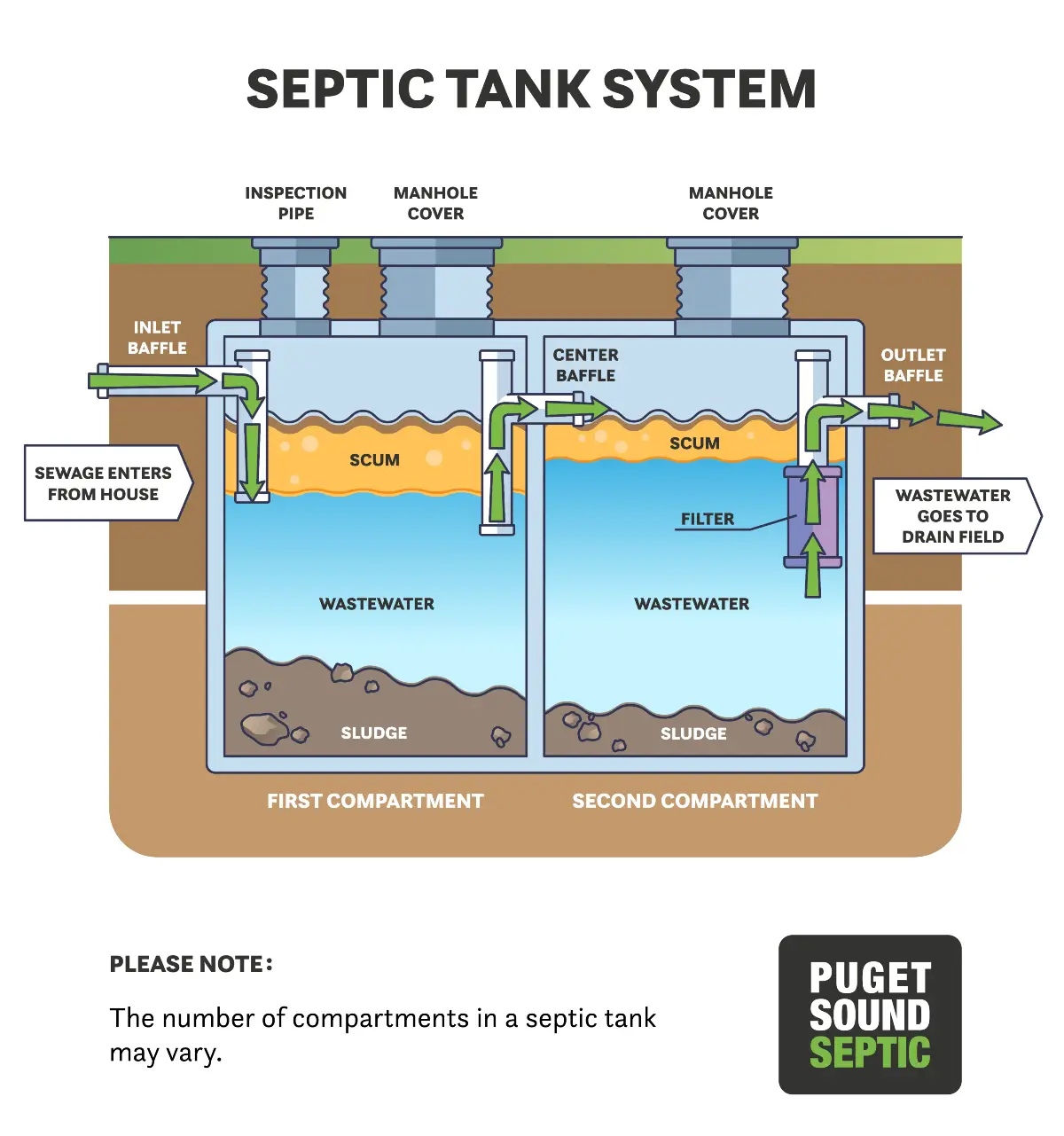
Here you can see that septic tanks are divided into two main compartments with different components to keep water and waste moving. This process works 24/7 to treat your household wastewater:
- Wastewater enters the first compartment through the input baffle, which slows down the flow and prevents disturbance.
- Inside the tank, natural bacteria break down solid waste.
- Lighter materials like grease and oils float to the top, forming the scum layer.
- Heavier solids sink to the bottom, creating the sludge layer.
- The middle layer (relatively clear water) flows into the second compartment through a filter.
- From the second compartment, this treated water exits through the output baffle and flows into your drain field. The drain field is a series of perforated pipes buried in the gravel-filled trenches.
- Here, the water slowly filters through the soil, where natural processes remove harmful bacteria and nutrients before the water returns to the groundwater.
How do you know when a septic tank is full?
First, understand that your septic tank is always “full” of liquid, since that’s how it’s designed to work. What matters is the accumulation of solids (sludge and scum) that need regular removal and pumping. When these layers get thick, they reduce the tank’s ability to separate solids from liquids, leading to system failure.
Watch for these warning signs that indicate your tank needs pumping: slow drains throughout your house, gurgling sounds from plumbing, sewage odors in your yard or home, standing water or soggy areas near your septic tank or drain field, unusually green, lush grass over your septic area.
Why King County WA Septic Systems Are Different
Living in King County WA means dealing with unique challenges for your septic system. Our area’s heavy rainfall, clay-rich soil, and high water tables create special conditions that affect how your septic tank performs.
Unlike drier regions where septic systems have it easier, our local systems work overtime to process wastewater in saturated ground conditions. The frequent rain we experience can overwhelm septic drain fields, causing backups and system failures if not properly maintained.
Choose Us for Your Septic Pumping Needs
Fill out our form and we'll be in touch!
Maintenance Tips that Prevent Big Bills
Nobody wants to face a septic system emergency. The good news is that most major septic problems are preventable with proper care.
- Be mindful of what goes down your drains. Your septic system relies on bacteria to break down waste, so avoid flushing harsh chemicals, antibacterial soaps, or medications.
- Never flush non-biodegradable items, like wipes (even “flushable” ones), feminine products, cigarette butts, or dental floss.
- Spread laundry load throughout the week instead of doing them all in one day.
- Protect your drain field by keeping vehicles, heavy equipment, and livestock off the area.
- Plant only grass over your septic system, as tree and shrub roots can damage pipes.
- Direct roof drains and surface water away from the drain field to prevent saturation.
- Schedule regular inspections with professionals to catch problems early.
During maintenance visits from Puget Sound Septic, we check sludge and scum levels, inspect baffles and filters, check for proper drainage, and look for signs of wear or damage.
See Why King County WA Property Owners Choose Puget Sound Septic
When it comes to septic service in King County WA, expertise matters. Our team understands the unique challenges our local climate and soil conditions create. We’ve built our reputation on honest assessments, quality work, and educating homeowners about their systems.
Your septic system works hard for you every day. Isn’t it time you had a team working just as hard to keep it healthy? Contact us today to learn more about our services or to schedule your septic inspection.