Navigating the world of septic systems can feel overwhelming, especially when you start hearing technical terms like aerobic treatment unit (also known as an ATU). If you’re here, you’re likely asking an important question: Is this advanced system the right choice for my property?
An aerobic treatment unit is essentially a small-scale wastewater treatment plant for your home. To help you decide if it’s right for you, we’ll explore exactly how an ATU works, see how it stacks up against a standard septic system, and identify the unique situations where it truly shines.
We believe that an informed homeowner is a happy homeowner, and our goal is to give you clear, honest answers. We’re not here to sell you the most complicated system, but to help you find the perfect system for your specific needs.
How Does an Aerobic Septic System Work?
The secret is right in the name. “Aerobic” means “requiring oxygen,” and that’s exactly what an Aerobic Treatment Unit (ATU) is. Think of an aerobics class where you’re breathing hard to keep up with the high-intensity workout. An ATU takes in oxygen for a special type of bacteria that creates a highly efficient environment where microbes can break down waste far more quickly and effectively than in a standard septic tank.
A standard system works without air (anaerobically). An ATU creates an active, oxygen-rich ecosystem. Here’s a simplified look at how an ATU treats your home’s wastewater:
- Pre-Treatment Chamber: Just like a conventional system, wastewater first enters a chamber where solids settle to the bottom, forming sludge. This initial step prevents the system from being overwhelmed.
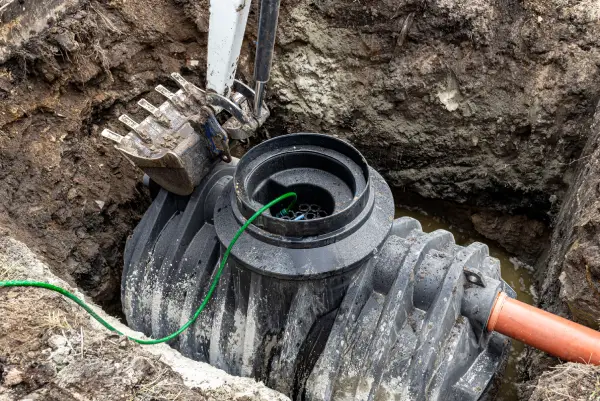
- The Aeration Chamber: This is the heart of the ATU. An air pump actively bubbles oxygen through the wastewater, energizing a colony of aerobic bacteria. These hardworking microbes rapidly consume organic matter and pathogens in the water.
- Settling Chamber: The water flows into a settling chamber, where remaining fine solids settle out, leaving a much clearer, cleaner liquid known as effluent, which rises to the top.
- Dispersal: This highly treated effluent is now clean enough to be safely dispersed. It’s cleaner than water from a normal septic tank, so it can often be sent to a much smaller drainfield or, in some cases, where local health codes permit, used for surface irrigation.
How Is an Aerobic Unit Different Than Other Types of Septic Systems?
At a glance, an ATU might seem similar to other systems, but its active, oxygen-fueled process creates some big differences. Here’s how it compares to a conventional system:
- Cost & Maintenance: ATUs have a higher initial installation cost and require more frequent, specialized maintenance checks to keep the mechanical parts in working order.
- Bacteria Type: ATUs use aerobic bacteria (requiring oxygen), which are far more effective at breaking down waste than the anaerobic bacteria (requiring no oxygen) used in conventional systems.
- Effluent Quality: The water leaving an ATU is significantly cleaner — up to 98% treated, clear, and nearly odorless. Conventional systems produce a lower-quality effluent that relies heavily on the soil for final treatment.
- Mechanical Components: ATUs are active systems with moving parts. They have air pumps, aerators, and often alarms that require electricity to run. A conventional system is completely passive and uses no electricity.
- Footprint: Because the effluent is so clean, the drainfield needed for an ATU can be much smaller than a conventional one.
Choose Us for Your Septic Pumping Needs
Fill out our form and we'll be in touch!
When Should You Consider an ATU?
While ATUs are impressive, they’re not for everyone. An ATU is a specific tool for a specific job. Most properties with good soil and enough space do perfectly well with a simpler, conventional system. But for a handful of homeowners, an ATU isn’t just a good choice — it’s the only viable option.
You should strongly consider an ATU in these situations:
- Poor Soil Conditions: Your property has dense clay, shallow bedrock, or other soil types that don’t absorb water well (a failed “perc test”).
- Small Lot Size: There simply isn’t enough space on your property to install the large drainfield required for a conventional system.
- High Water Table: The groundwater level is too close to the surface, making a traditional drainfield unsafe or ineffective.
- Proximity to Sensitive Waterways: Your home is near a creek, lake, or sensitive area, where local regulations demand a higher level of wastewater treatment to protect the ecosystem.
- Replacing a Failing System: An ATU can often be the best solution for replacing a failed conventional system on a property with challenging site limitations.
Pros and Cons of Aerobic Septic Tank Systems
So, let’s break it all down. When you’re weighing your options, what are the real-world benefits versus the practical considerations of owning an ATU?
Key Benefits
- Exceptional Treatment: An ATU provides the highest level of wastewater treatment available for a residential system, producing an effluent that is remarkably clean and safe.
- Environmental Protection: It’s the most responsible choice for protecting nearby wells, streams, and sensitive shorelines from contamination.
- Solves Site Problems: It is the definitive solution for lots with “problem” soil or limited space, allowing homes to be built where they otherwise couldn’t.
- Smaller Drainfield: The system requires a significantly smaller land area for final dispersal, preserving more of your yard for landscaping and other uses.
Potential Drawbacks
- Higher Upfront Cost: The technology and additional components make ATUs more expensive to purchase and install than conventional septic systems.
- Electricity Use: The aerator and pumps must run to keep the system working, which will add a modest, continuous amount to your monthly electric bill.
- Mechanical Complexity: More moving parts mean more potential points of failure. Unlike a passive concrete box, an ATU relies on its mechanical components to function.
- Requires Professional Maintenance: This is not a “set it and forget it” system. It requires a service contract and regular professional check-ups to ensure it’s operating correctly.
ATU Maintenance
While all septic systems need regular pumping and care, ATU maintenance goes a step further. It’s less like a simple pump-out and more like a tune-up for a high-performance engine. In addition to pumping the sludge from the pre-treatment tank, a proper service visit from a certified technician involves:
- Inspecting the air pump and its filters.
- Testing the alarm systems.
- Cleaning and adjusting system components.
- Checking the clarity and quality of the effluent to ensure the system is treating waste effectively.
This level of care is critical for protecting your investment and ensuring the system functions properly for years to come.
Services for Aerobic Treatment Septic Systems in King County WA
Choosing, installing, and maintaining an aerobic treatment unit requires a depth of knowledge that goes beyond a standard septic service. These are sophisticated pieces of equipment, and you deserve a team that understands them inside and out.
Whether you’re exploring if an ATU is right for your new build, need a reliable expert to perform a comprehensive septic inspection, or simply have questions about different types of septic systems, we are here to help. We pride ourselves on providing honest advice and friendly, dependable service.
Call Puget Sound Septic today or contact us online to schedule a consultation or service for your aerobic treatment unit!
Back to Common Types of Septic Systems and How They Work