
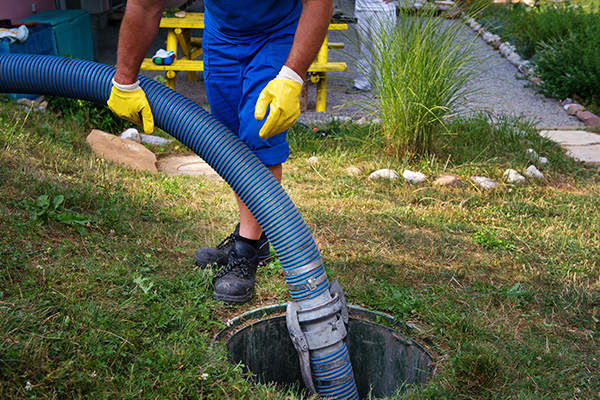
When it comes to household maintenance, caring for your septic tank should be a top priority — after all, breakdowns and overflows are a lot more than just inconvenient. One of the best ways to keep your septic system in great working condition is routine septic tank pumping.
But, how often should you have your septic tank pumped, and what all does the process involve? Here are the basics that every homeowner should know.
How Frequently Should Septic Tanks Be Pumped?
At least once every two to five years is a good ballpark estimate. That said, every system is different, and some tanks may need more frequent maintenance than others.
Which Factors Affect How Often You Should Have Your Septic Tank Pumped?
- System age: Older units are more susceptible to breakdowns. Inspecting and pumping more often can ease the system’s workload and catch potential problems early on.
- Tank size: Smaller tanks hold less volume, so it makes sense that they generally need to be pumped more often than larger units.
- Household size: Larger households produce more wastewater, which means that solids build up faster and need to be pumped more often.
Choose Us for Your Septic Pumping Needs
Fill out our form and we'll be in touch!
Why Do You Need to Pump Your Septic Tank Every Few Years?
- Most residential septic tanks hold between 780 and 1,250 gallons of waste.
- But the average household produces over 9,000 gallons of wastewater per year.
Think about that. Your household may produce about seven to nine times as much waste as your septic tank can hold. So, what happens to it? Why don’t septic tanks need to be pumped more often? Where does it go?
Well, septic tanks aren’t just a receptacle for waste; these systems actually treat a lot of the wastewater you produce and filter it using a natural biological process.
Once wastewater flows into the tank, the solids gradually fall to the bottom and form a sludge. This sludge is what builds up and needs to be pumped.
Meanwhile, the rest of the water and any oils or grease float to the top, where bacteria in the tank break them down.
Any remaining liquid, called effluent, flows out of the tank into the drain field above your system, where it is further filtered and treated by the soil. This ongoing process keeps your tank from filling up too quickly, so that it only needs to be pumped every two to five years on average.
Timely pumping is crucial for avoiding problems and maximizing your septic system’s lifespan. To learn more, be sure to read >> Our Comprehensive Guide to Septic System Maintenance
Signs You Need Septic Tank Pumping
While 2-5 years is a good guideline for routine septic pumping, you should also know the signs that your tank is getting full. Overlooking these signs could put strain on your system.
If you notice these problems, we recommend calling us for a septic tank pump out.
- Slow drains in sinks or showers
- Slow flushing
- Gurgling sounds in pipes
- Unpleasant odors over the drain field
- Particularly lush, green grass in the drain field
What Happens If You Don’t Get Your Septic Tank Every Two to Five Years?
Two to five years is an average frequency. It’s entirely possible that your household’s septic tank needs pumping sooner than that, or you can hold off for even longer.
For example, if you have eight or ten people living in a large home, you might need to get your tank pumped every year. Similarly, if it’s just one person in a household, you may be able to go longer than five years.
The key takeaway here is this – if you see signs your tank needs to be pumped, get it pumped as soon as possible. The consequences of ignoring those signs can be devastating.
- Indoor sewage backups and structural water damage: Raw waste forced through drains, ruining floors, drywall, and cabinetry.
- Surface ponding and biohazards: Toxic “blackwater” pooling in the yard, creating immediate infection risks for people and pets.
- Total drain field failure: Permanent soil clogging that requires a full system replacement costing $10,000–$30,000+.
- Well and groundwater contamination: Pathogens like E. coli and nitrates leaching into drinking water supplies.
- Toxic gas accumulation: Dangerous levels of methane or hydrogen sulfide venting into the home.
- Legal condemnation and fines: The home being declared uninhabitable by health officials and facing environmental penalties.
- Tank collapse: Structural failure or lid cave-in due to sludge weight, creating a fatal fall hazard.
So, whether it’s every two years, five, or somewhere outside that range, the key takeaway is to get your septic tank pumped when the time is right. Don’t let a routine service turn into a catastrophe, and we offer emergency septic tank pumping services when needed.
Fast Septic Pumping in King County WA
Whether you need a routine pumping or your septic tank is full and needs to be emptied as quickly as possible, Puget Sound Septic is the team for the job. With fast response times and a fleet of state-of-the-art vacuum trucks, our technicians are equipped to make septic pumping as stress-free as possible.
Don’t wait until you have a problem with your septic system — call Puget Sound Septic for quality septic pumping today.
Back to Septic Pumping