
If you have a septic system, one of the most important things you can do is learn proper septic tank maintenance techniques. A poorly maintained septic system doesn’t just lead to slow drains, foul odors, and sewage backups – it can lead to catastrophic system failure that causes major damage to your home and the surrounding area.
Yuck! The good news is you can avoid these nasty, expensive, and potentially dangerous situations by following the proper septic tank maintenance best practices. At Puget Sound Septic, we’re here to help keep your septic system in good shape. Part of that is being there for you when you need us; another equally important part is giving you the best possible information to help you avoid issues whenever possible.
This comprehensive Guide to Septic Tank Maintenance is designed to help you avoid issues and maximize the lifespan of your septic tank and the overall system.
Dealing with a septic emergency?
If it’s an urgent situation, like a sewage backup or your alarm is going off, call us immediately. We’re available 24 hours a day, 7 days a week for septic emergency services.
Choose Us for Your Septic Pumping Needs
Fill out our form and we'll be in touch!
What Are Some DIY Septic Tank Maintenance Tasks the Average Homeowner Can Do?
Not every part of septic care requires a professional. While some aspects like pumping should always be left to the pros, there are several tasks you can perform as needed to extend the life of your system.
The DIY Septic Maintenance Checklist
- Divert the Downspouts (Difficulty: 1/5) Check your gutters during a rainstorm. If a downspout is dumping water directly onto your drain field, buy a $10 plastic extension to aim that water elsewhere. A flooded drain field cannot process waste.
- The “Sniff & Squish” Walk (Difficulty: 1/5) Once a month, walk the area over your tank and drain field. If you smell sewage or the ground feels “spongy” or muddy even when it hasn’t rained, your system is struggling and needs a professional eye.
- Test the Alarm (Difficulty: 2/5) If your system has a control box (usually in the garage or on the side of the house), press the “Test” button once a season. This ensures the light and buzzer actually work so you’re alerted before a backup occurs.
- Mark the Lid (Difficulty: 3/5) If your tank lid is currently buried, find it once and place a decorative heavy stone or a potted plant over it. This saves you (and your pumper) from digging up the lawn next time service is due.
- Clear the Vents (Difficulty: 3/5) Check any white PVC pipes sticking out of the ground. Ensure they aren’t blocked by tall grass, bird nests, or debris. Your system needs to “breathe” to keep the waste-eating bacteria healthy.
- Clean the Effluent Filter (Difficulty: 5/5) If you have a riser (a ground-level lid), you can reach into the “outlet” side of the tank, pull out the plastic filter, and hose it off back into the tank. Note: This is a “dirty” job. Wear heavy rubber gloves and eye protection, and never lean your head inside the tank due to toxic gases.
Not sure when you need professional pumping services? Check out our article >> How to Tell You Need Septic Tank Pumping. While our technicians are there, we’ll perform a full inspection to alert you about other possible maintenance issues.
Septic Tank Maintenance Dos and Don’ts
Owning a septic system doesn’t have to be hard. With a little routine care and following these simple Septic Dos and Don’ts, it’s easy to avoid most problems.
5 Things to Make Sure to Do to Maintain Your Septic System Properly
We’ll start with what you can do to care for your septic system. Your septic system has a surprisingly fragile ecosystem, and you need to be careful with what goes down your pipes.
- Dispose of Food Properly: Even though it’s biodegradable, food won’t break down fast enough in a septic tank and can cause a lot of problems. It can also clog your pipes and drain field. Adding solids to your septic tank will require more frequent pumping, so keep those food scraps in the trash or compost where they belong.
- Minimize Runoff: Divert water away from your septic tank and drain field. Excess water in the soil reduces the effectiveness of your drain field, so do what you can to keep the area dry. This also means you should be mindful while watering your lawn.
- Schedule Regular Maintenance: Finally and most importantly, schedule regular professional maintenance. Nobody knows better than the pros how to keep your septic system in good working order. You should have a septic inspection at least once every two to five years, but there are various factors that could change this time frame.
- Consider Load Management: Septic systems have a “daily limit.” If someone does 10 loads of laundry on a Saturday while the dishwasher is running, they can flood the tank and push solids into the drain field. The best way to avoid this is to stagger water usage (e.g., one load of laundry a day instead of a “laundry day”).
- Use Septic-Safe Toilet Paper: Not all toilet paper is created equal. Some “ultra-plush” or extra-thick brands don’t break down quickly enough, leading to a “blanket” of paper that clogs the tank’s inlet. Look for labels that specifically say “Septic Safe” or “Rapid-Dissolve.” These are designed to fall apart almost immediately when they hit the water, ensuring your tank’s bacteria can process the waste efficiently without getting smothered by paper.
5 Things to Never Do to Your Septic Tank
Now for the things you shouldn’t do. Septic systems are surprisingly delicate and can easily be damaged if you aren’t careful. Here are a few things to avoid:
- Don’t Flush Nondegradable Items: Aside from toilet paper (and waste), nothing else should be flushed down the toilet. Be sure not to flush wipes (even wipes labeled as flushable), feminine hygiene products, dental floss, diapers, or napkins
- Try Not to Ignore Warning Signs: If your pipes are draining slowly, making a lot of noise, backing up, or smelling bad, don’t wait; all of these are signs of septic problems. These problems will not resolve on their own, so don’t hesitate to call Puget Sound Septic. If your septic system has an alarm, don’t ignore it going off! It’s a sure sign that your septic needs some attention.
- Avoid Damaging Your Drain Field: Trees and shrubs planted in your drain field can grow roots that damage your tank. Driving over your septic tank (and the surrounding drain field) can compact the soil over time, making it harder for water to drain away. Plant trees and shrubs at least ten feet away from your septic tank, and keep the same distance while driving. Not sure where your septic tank is located? We can help with septic locating services.
- Say No to Additives: Most septic technicians (and the EPA) agree that if you use the system correctly, you don’t need additives. Some chemicals can actually harm the system.
- Never Pour Fats, Oils, or Grease (FOG) Down the Drain: This is a silent killer for septic systems. While it may be liquid when it’s hot, grease cools and solidifies inside your pipes and tank. Even worse, it floats in the “scum” layer and can eventually flow out into your drain field. Once there, it “waterproofs” the soil, preventing it from absorbing and filtering water—a mistake that often leads to a total (and expensive) system failure.
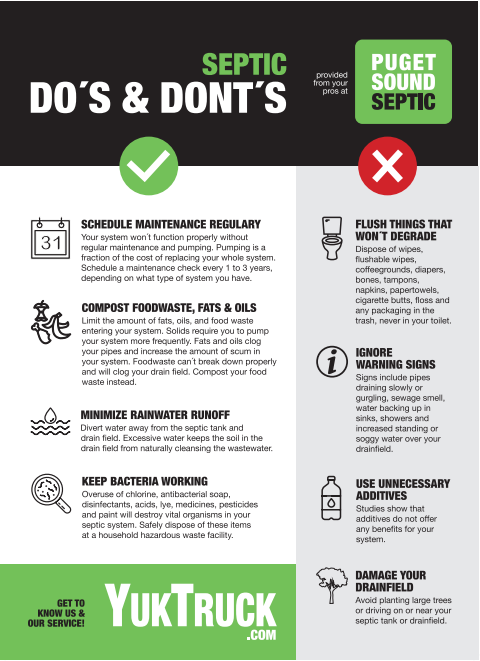
Download this handy Septic Tank Do’s and Don’ts List as an easy reference guide
How Your Septic System Works (The Basics)
To ensure proper maintenance, it’s important to understand the basics of how your septic system actually works. Think of your septic system as a private, miniature wastewater treatment plant located right in your backyard. It consists of two main parts: the septic tank and the drain field.
1. The Separation (The Tank)
When water leaves your home, it flows into the septic tank. This is a watertight container where solids settle and bacteria get to work. Inside the tank, your waste naturally separates into three distinct layers:
- The Scum Layer: Fats, oils, and grease (FOG) float to the top.
- The Effluent Layer: In the middle, this relatively clear water is ready to be filtered.
- The Sludge Layer: Heavy solids sink to the floor, where bacteria break them down into a dense “sludge.”
2. Treatment in the Drain Field
As new water enters the tank, it pushes the middle layer (the liquid effluent) out through an outlet pipe and into your drain field. This is a series of perforated pipes buried in gravel-filled trenches.
The soil under your drain field acts as a natural filter. As the water seeps through the ground, microbes in the soil remove harmful bacteria, viruses, and nutrients before the water eventually recharges the groundwater.
Pro Tip: If the sludge or scum layers get too thick because the tank hasn’t been pumped, they can overflow into the drain field, “clogging” the soil and causing the entire system to fail. This is why regular maintenance is your best insurance policy!
Call Puget Sound Septic for Septic Tank Maintenance in King County WA
We’re the team to call when your septic system needs repairs or when it’s time for your routine septic pumping. We’re experts in our field, and always ready to help! We keep on top of the latest and greatest in septic care technology, so you can count on us to bring efficient and thorough service to you.
Give us a call for all of your King County WA septic maintenance needs!
Back to Septic Tank Servicing